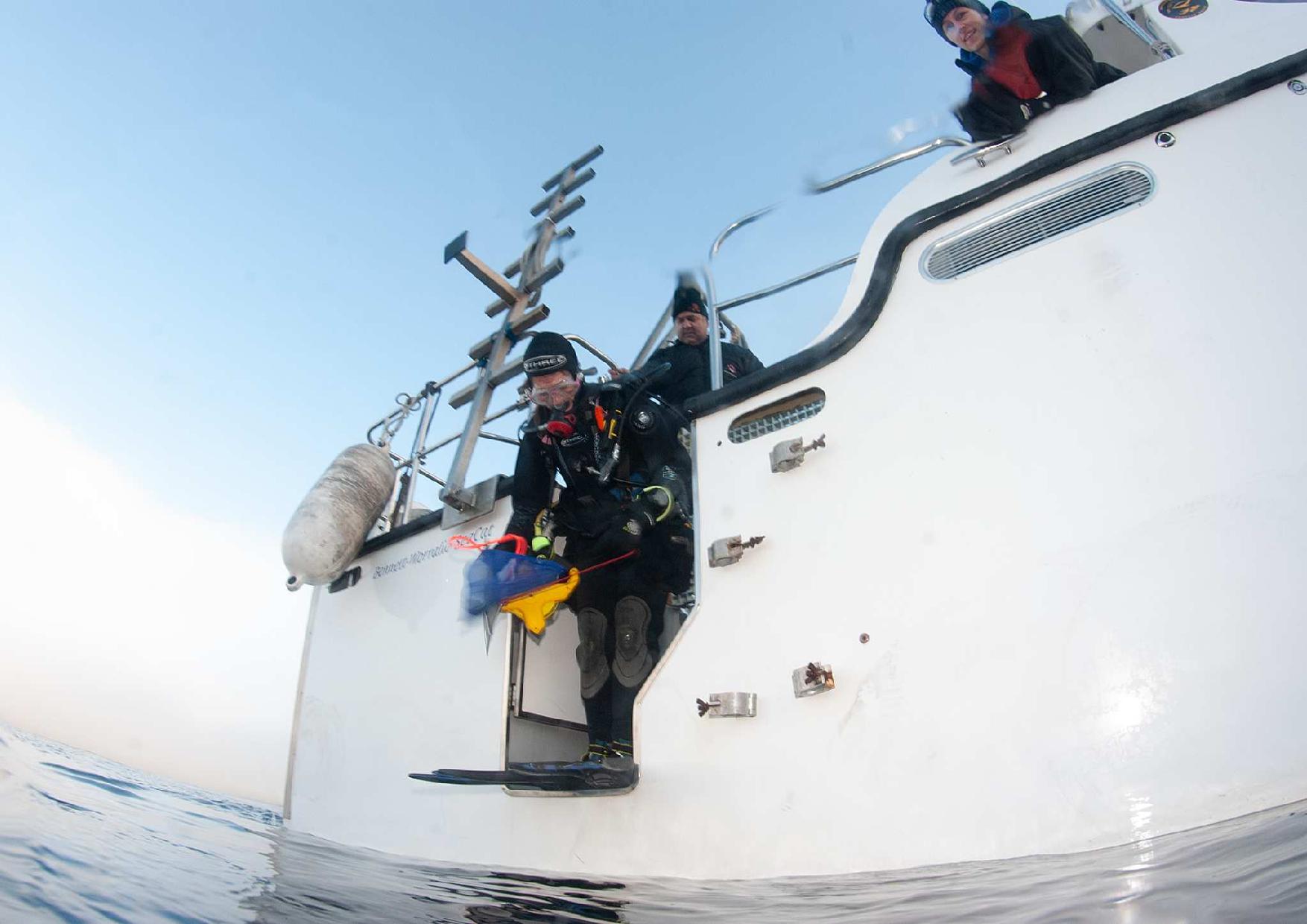
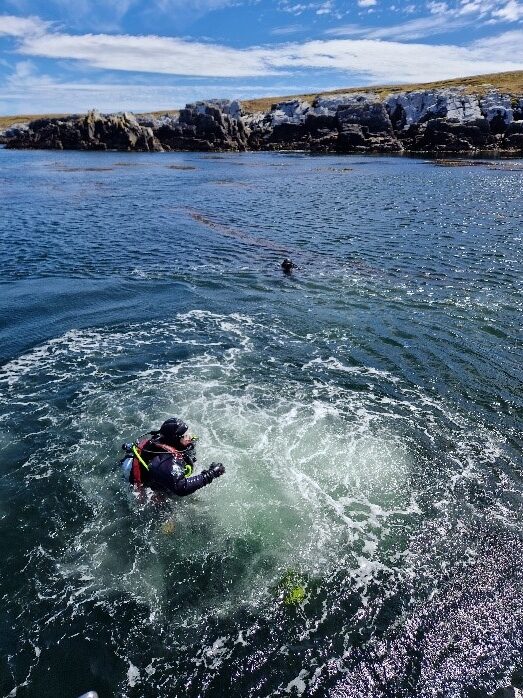
I have been continuing work on one of my PhD chapters ‘the effects of eroded peat soil on the biodiversity of shallow marine invertebrates (Hummock Island)’, working mostly on data exploration. Some of my highlights include diving at my regular dive sites to record any seasonal changes in sublittoral invertebrate biodiversity, with thanks to my PhD collaborators the Shallow Marine Surveys Group. We were lucky enough to have some curious dolphins approach us in the water, plus experience some great weather for these dives – summer is definitely here! We are also still planning a dive expedition to Port Stephens, West Falkland, in the New Year.
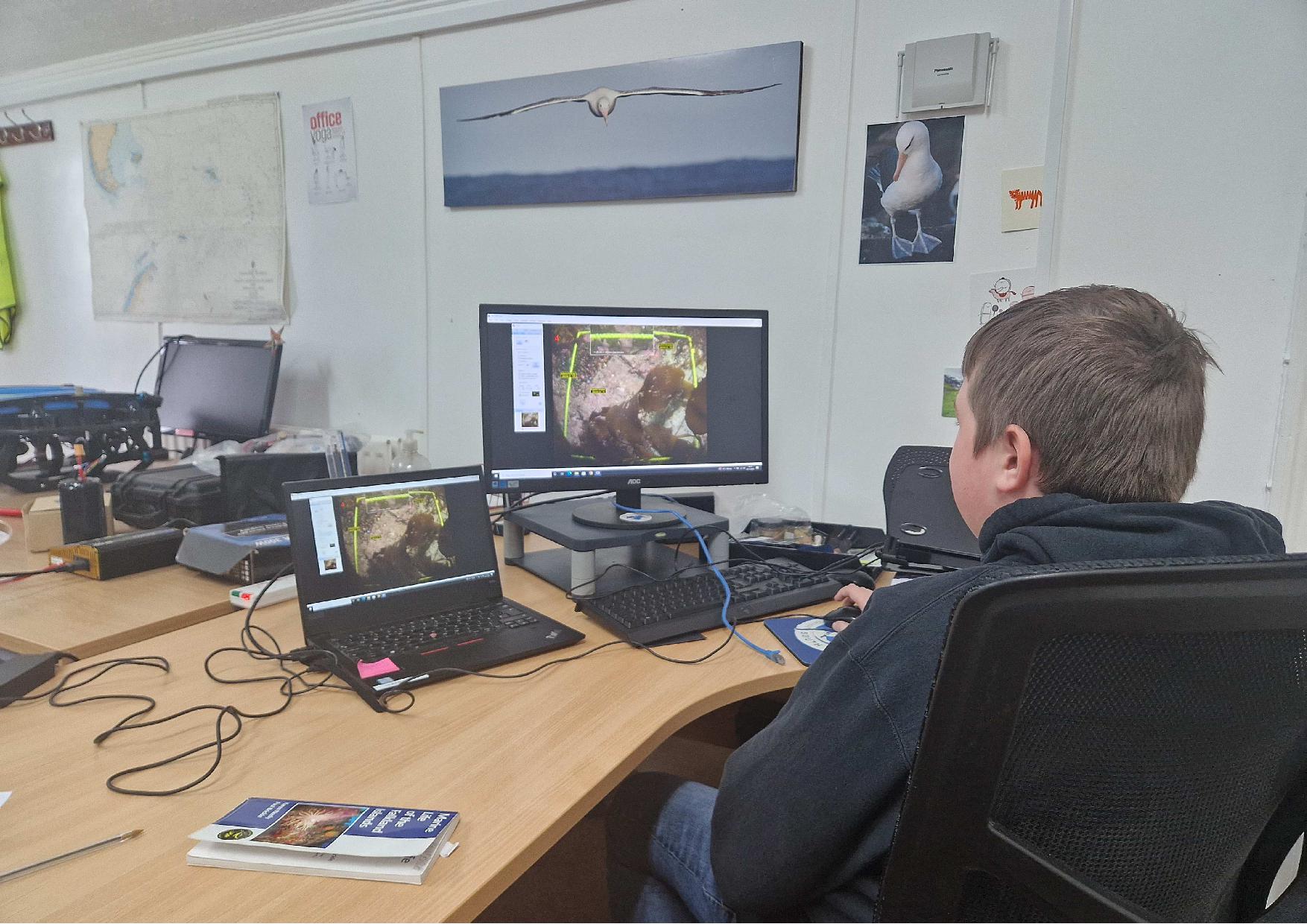
It was great to have not just one, but two students from the local school join us for one week for work experience. I was able to explain my PhD aims, show them some of the wonderful local shallow marine life through photos and BRUV footage, plus teach them how to identify species in a quadrat photo using guidebooks. They even had a go at using PhotoQuad, the software I use for photo ID. Besides this, I have also been working on university reports, attending online university seminars and ‘Research Day’ presentations.
Image above and top right: Divers at Amy's dive sites and bottom left image - work experience student learning how to use PhotoQuad.
Used to determine whether a user is included in an A / B or Multivariate test.
18 months
_ga
ID used to identify users
2 years
_gali
Used by Google Analytics to determine which links on a page are being clicked
30 seconds
_ga_
ID used to identify users
2 years
_gid
ID used to identify users for 24 hours after last activity
24 hours
_gat
Used to monitor number of Google Analytics server requests when using Google Tag Manager
1 minute
_gac_
Contains information related to marketing campaigns of the user. These are shared with Google AdWords / Google Ads when the Google Ads and Google Analytics accounts are linked together.
90 days
__utma
ID used to identify users and sessions
2 years after last activity
__utmt
Used to monitor number of Google Analytics server requests
10 minutes
__utmb
Used to distinguish new sessions and visits. This cookie is set when the GA.js javascript library is loaded and there is no existing __utmb cookie. The cookie is updated every time data is sent to the Google Analytics server.
30 minutes after last activity
__utmc
Used only with old Urchin versions of Google Analytics and not with GA.js. Was used to distinguish between new sessions and visits at the end of a session.
End of session (browser)
__utmz
Contains information about the traffic source or campaign that directed user to the website. The cookie is set when the GA.js javascript is loaded and updated when data is sent to the Google Anaytics server
6 months after last activity
__utmv
Contains custom information set by the web developer via the _setCustomVar method in Google Analytics. This cookie is updated every time new data is sent to the Google Analytics server.
2 years after last activity
Google reCAPTCHA helps protect websites from spam and abuse by verifying user interactions through challenges.
Name
Description
Duration
_GRECAPTCHA
Google reCAPTCHA sets a necessary cookie (_GRECAPTCHA) when executed for the purpose of providing its risk analysis.
179 days
Marketing cookies are used to follow visitors to websites. The intention is to show ads that are relevant and engaging to the individual user.
Google Maps is a web mapping service providing satellite imagery, real-time navigation, and location-based information.