


Project overview
First detected in the Falkland Islands (FI) in the 1990s, F. auricularia can now be found in large numbers in both the urban and wild environment. Earwigs are considered pests causing damage to garden horticulture, and regarded as a public nuisance, however the ecological impacts of this invasion have not been investigated. Considering its generalist feeding strategy and ability to occupy multiple ecological niches, which can negatively impact rare or sensitive native species, F. auricularia has the potential to significantly impact recipient communities and affect ecosystem functioning. This has resulted in F. auricularia becoming a species of concern for the Falkland Islands Government.
This study on the European earwig invasion in the Falkland Islands, made possible through the active participation of Falkland Islands residents, will assess the ecological impacts of this invasive species.
By investigating the threats to biodiversity, this research aims to enable policymakers, conservationists, and the public alike to prioritise effective measures that safeguard the Falkland Islands' natural heritage for future generations. We hope the findings will underscores the importance of proactive management strategies and community engagement in combating terrestrial island invasions.
Project Objectives


Year in Review: July 2023 - June 2024
A novel approach to sampling earwig populations in the Falklands was developed due to the unique environmental conditions. Pitfall traps were identified as an effective method. To incorporate local knowledge and perceptions into management strategies, a comprehensive questionnaire-based investigation was conducted. The survey, designed to capture both quantitative and qualitative data, will inform targeted and community-oriented control measures and foster public engagement in invasive species management. The data is currently being collated and will be assessed and reported later this year. Key molecular research aims were identified to elucidate the invasion ecology of European earwigs in the Falklands. This includes determining the origin of earwig introduction, number of introductions and identifying subspecies present in the population. Methodologies for DNA extraction, PCR, and primer selection were developed and optimized. Engagement with the scientific community was prioritized through presentations at the Royal Entomological Society Conference and the QUB-AFBI Alliance conference. These opportunities not only facilitated knowledge exchange but also fostered collaborations and recognition within the scientific community.
Key highlights
There is great interest in cataloguing and understanding Falklands invertebrate biodiversity which is not completely known. We will add all the species we find to species lists, and contribute to the creation of a genetic library for future studies.
I have presented the project at 3 conferences this year:
Key statistics


Year in Review: July 2024 - June 2025
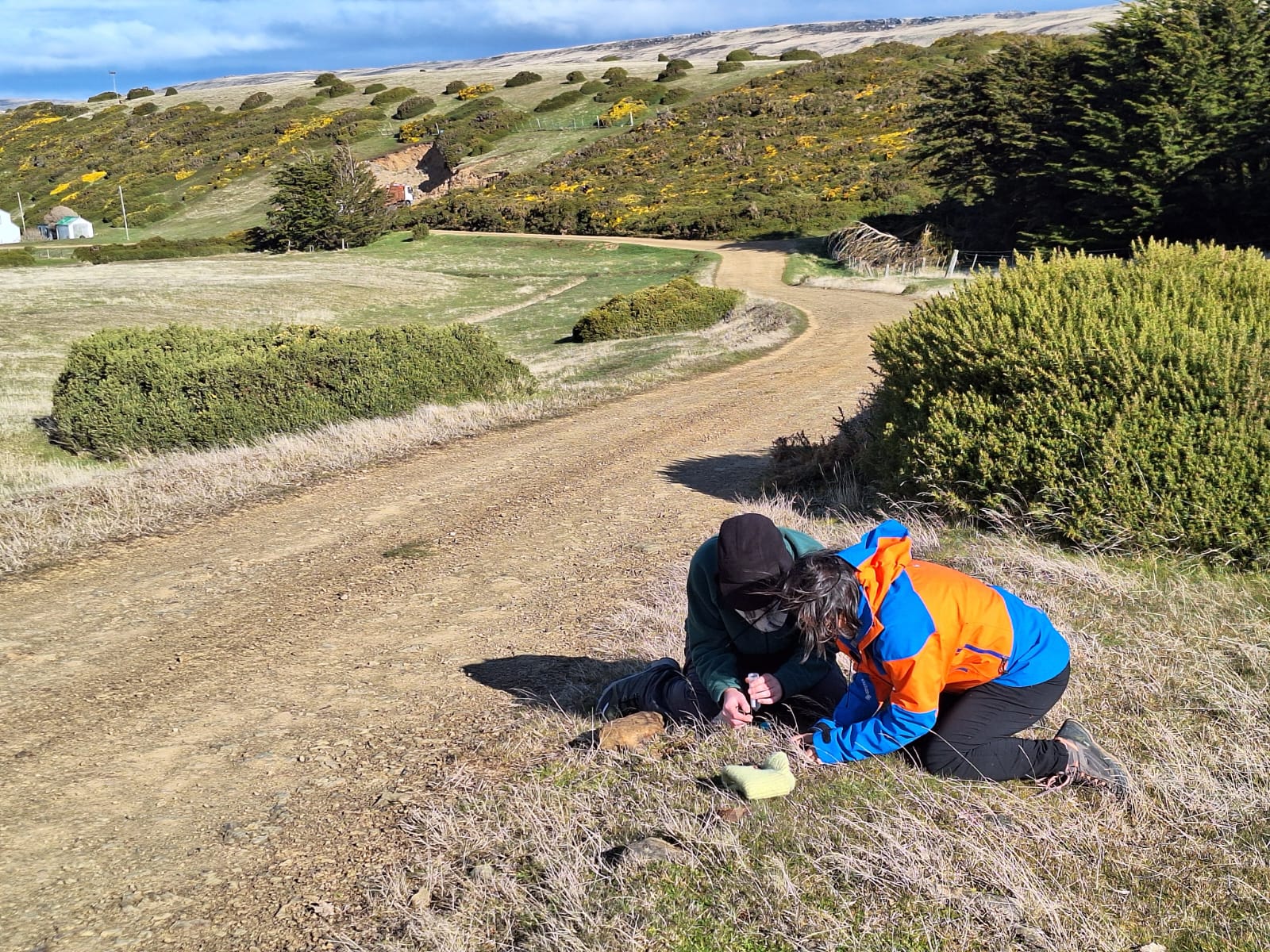
This year marked significant progress in the earwig invasion ecology project, with 14 months of fieldwork completed across East and West Falkland and four outer islands. Data collection on spatial and seasonal abundance has concluded, and analysis of native invertebrate communities is underway. Genetic sampling in Magellanic Patagonia was finalised, setting the stage for comparative analysis of invasion pathways. The public consultation survey achieved strong community engagement, enriching the social dimension of the research. Last year I presented the project at International Congress of Entomology. We look forward to update you next year with all of our final results!
Key highlights
Key statistics
