
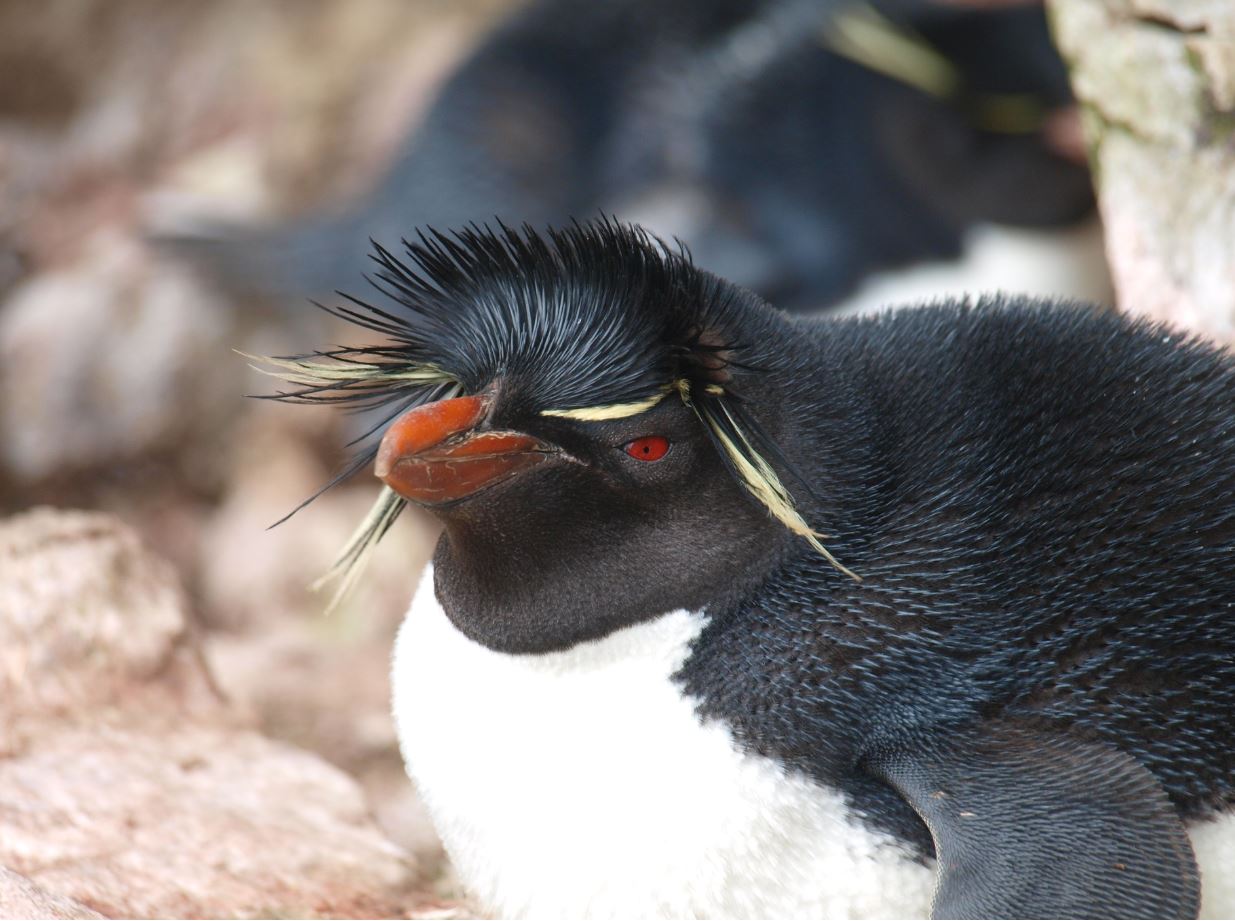
Environmental variability plays a crucial role in shaping the foraging behaviour and demography of seabird populations, with significant implications for species conservation. In recent decades, southern rockhopper penguins (Eudyptes chrysocome) have experienced dramatic declines in the Falkland Islands, with mass mortality events thought to be linked to changes in sea temperatures and prey availability. As environmental fluctuations are expected to intensify due to climate change, the Falkland Islands—home to a major portion of the global population—offer a critical opportunity to study how this iconic predator responds to environmental change.
My research will explore how environmental variability affects both the foraging behaviour and population dynamics of southern rockhopper penguins across multiple colonies in the Falklands. By utilising over 10 years of archival data alongside new fieldwork, I aim to investigate these dynamics using biologging techniques (e.g., GPS and time-depth recorders) to track at-sea behaviour. To further understand foraging preferences and potential changes in prey availability over time, I will employ stable isotope analyses, DNA metabarcoding, and regurgitate studies. Additionally, I will assess and compare key demographic parameters, such as breeding success and population size, to evaluate how environmental shifts impact the overall population survival.
Understanding the relative importance of various environmental drivers, and how they interact, is crucial for predicting species responses at both individual and population levels. Ultimately, my research will contribute to broader marine spatial planning and inform ecosystem-based management strategies in the Falkland Islands, aiding in the conservation of this vulnerable species.
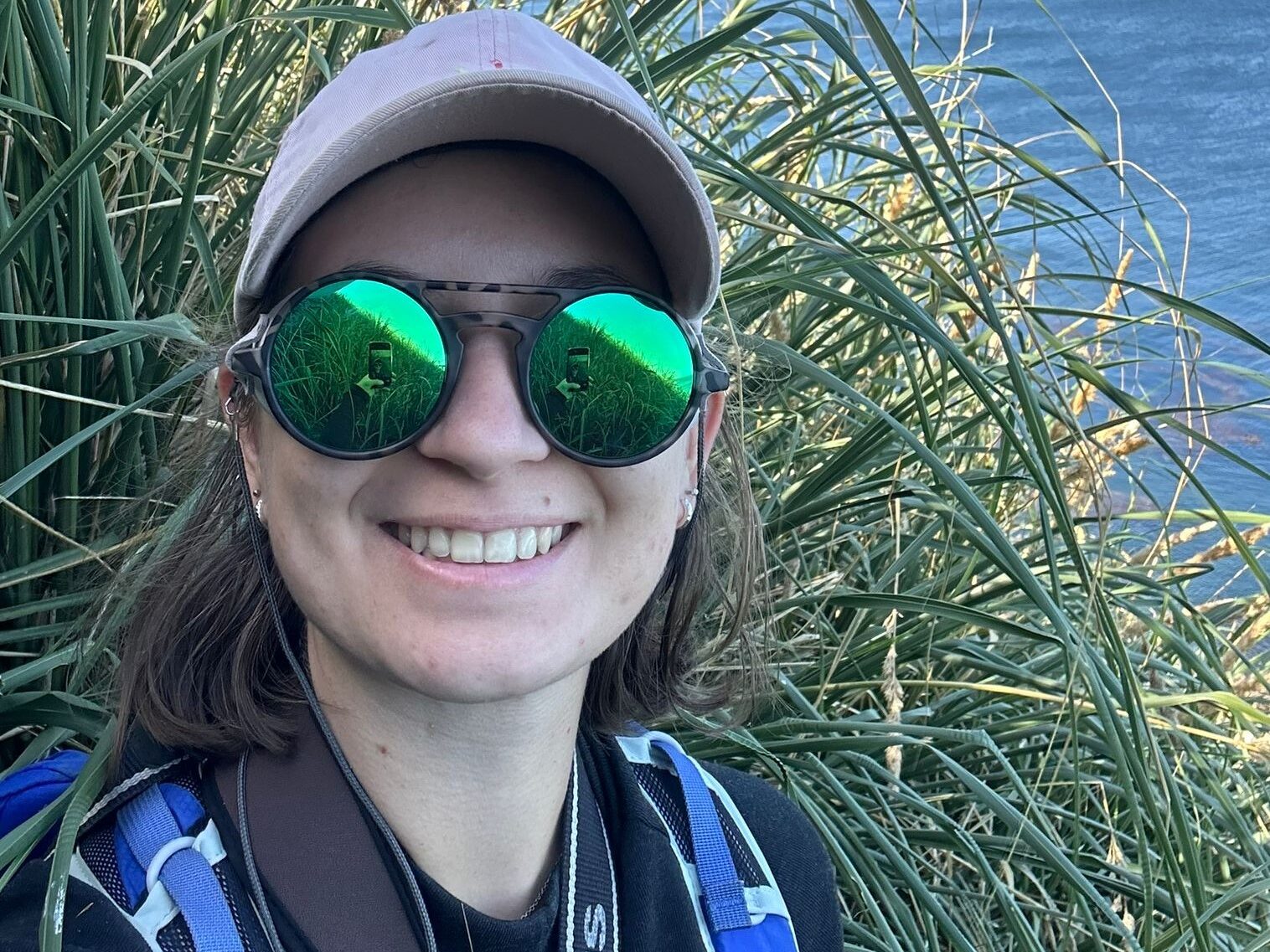
Diane’s career began with an undergrad in Biology at the University Grenoble Alpes, followed by an MSc in Marine Conservation at the University of Aberdeen. After graduating, Diane worked for three years as a Marine Ecological Consultant for HiDef Aerial Surveying, where she worked on Environmental Impact Assessments (EIA) for seabirds and marine mammals in the context of offshore wind farm construction around the UK and Ireland. Throughout these three years, Diane specialised in seabird ecology, gained experience in species distribution modelling, team leading and training, as well as scientific report writing for NaturalEngland and Joint Nature Conservation Committee (JNCC), amongst others. As part of her work, Diane also successfully participated in multiple fieldwork seasons in the Shetland Islands, surveying seabird colonies. She has now returned to the University of Aberdeen for her PhD, where she will be studying one of her favourite seabird species group, penguins.
You can find more information about her work and research on her blog: https://dianepavat.wixsite.com/marinebiology
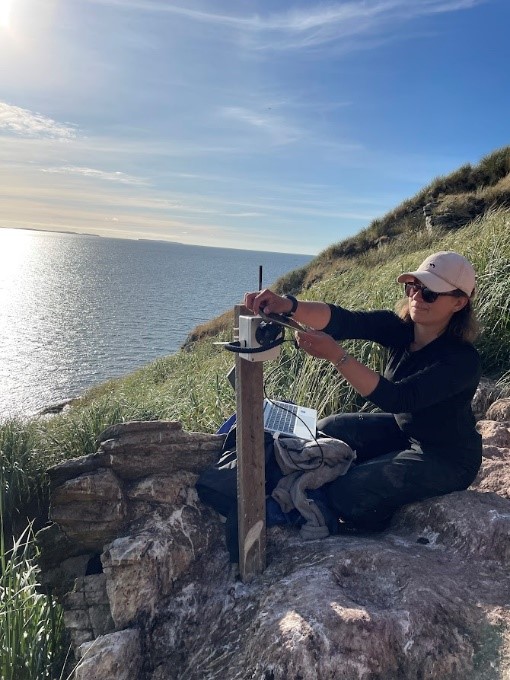
During the reporting year I reached several significant academic and professional milestones. I attended my first Seabird Group Conference in Coimbra, Portugal in September, began my PhD in October and immediately embarked on my first field season in the Falkland Islands in November. I conducted fieldwork on Hummock Island throughout November, December, and January, and on Saunders Island in December, working with multiple research teams. My focus was southern rockhopper penguins, but I also helped collecting data on Magellanic penguins, Falkland Island shags, sooty shearwaters, and short-eared owls. For my project, I deployed 17 GPS tags and 11 time-depth recorders on rockhoppers, and collected blood and feather samples from those individuals for stable isotope analysis, significantly developing my field skills in wildlife handling and biologging.
In parallel, I secured competitive funding for my second field season in 2025/26, receiving a total of £4,450 from the Watt Fund and the Shackleton Scholarship Fund. I attended a specialist training course on using Earth observation data at Space Park Leicester, completed the first level of CMI Project Management and visited a project collaborator at BAS. I started preparing 340 archival feather samples for SIA to investigate long-term diet and foraging ecology and I have now started diving into the analysis of the demography and tracking data.