The past few months have been very exciting and full of adventures, from attending my first Seabird Group conference, to starting my PhD and completing my first field season in the Falkland Islands.
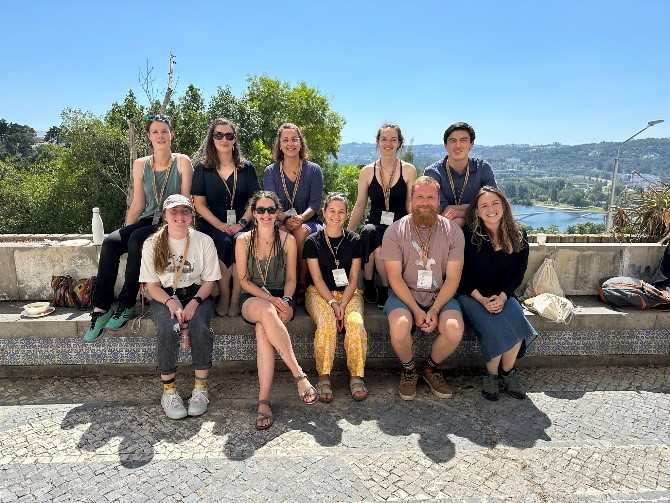
The 16th international Seabird Group conference was held in the first week of September 2024 at the University of Coimbra, a UNESCO World Heritage site. In between rays of sunshine, I attended a great diversity of talks from MScs, PhDs, researchers and passionate ornithologists. Transitioning from three years in consultancy, this conference marked my academic debut and presented a valuable opportunity to expand my network, meet key collaborators of my project and get to know fellow PhD students from the PhULMaR group (PhD Inter-University Lab for Marine Bird Research).
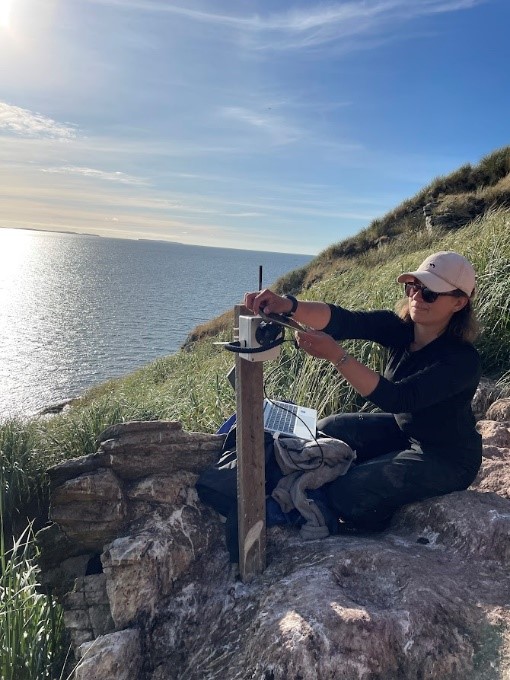
With just a month and a half following this intense introduction to research, I organised my first field season in the Falkland Islands to begin data collection for my project. Planning the logistics proved challenging, necessitating careful consideration of various factors, including avian influenza, funding availability, and working opportunities. Nonetheless, with perseverance and the generous support of my supervisors, SAERI, Dr Norman Ratcliffe, Dr Klemens Pütz, and Dr Andrea Raya Rey (and her team!), this first season was a success!
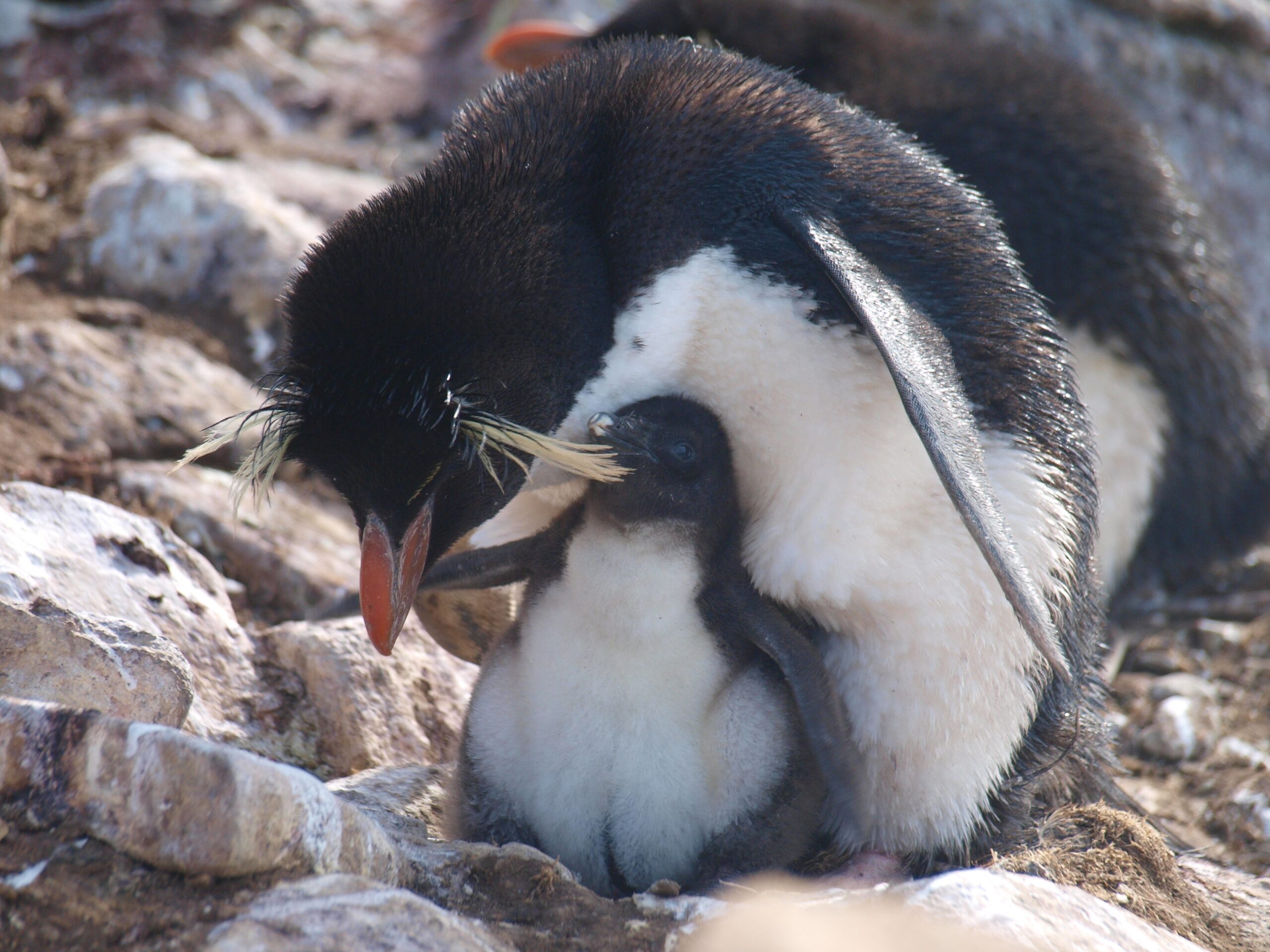
My fieldwork focused on collecting foraging behaviour and diet data from southern rockhopper penguins (Eudyptes chrysocome). The aim of these collections is to better understand the impact of environmental change on the species behaviour and demography over time and throughout the Falkland Islands. To do so, I successfully deployed GPS tags and time-depth recorders at two colonies, Saunders Island (The Neck) and Hummock Island, in West Falklands. Additionally, I collected feather and blood samples from each individual to later analyse their isotopic composition in the lab, which will be used as proxy for diet and trophic niche identification.
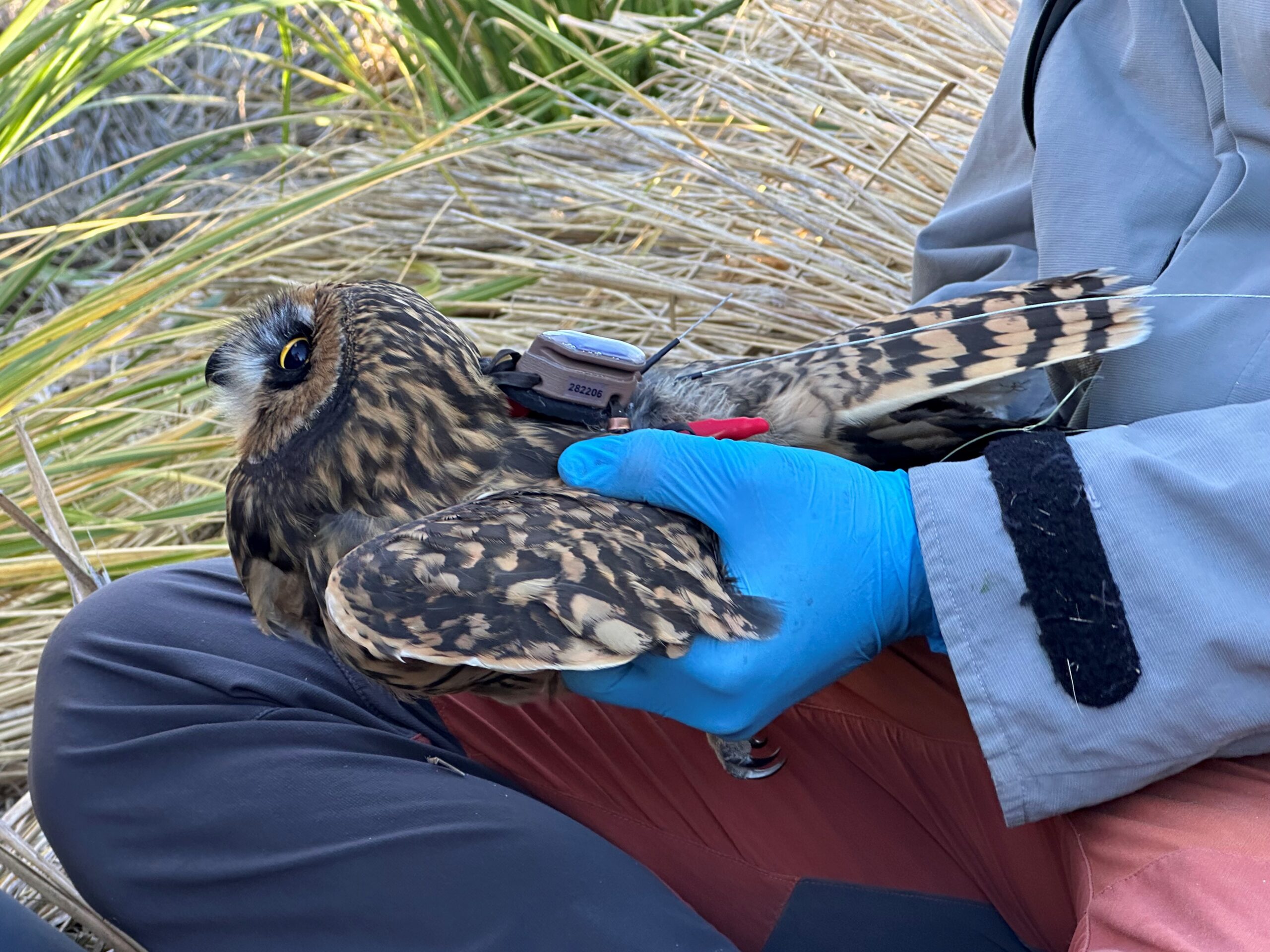
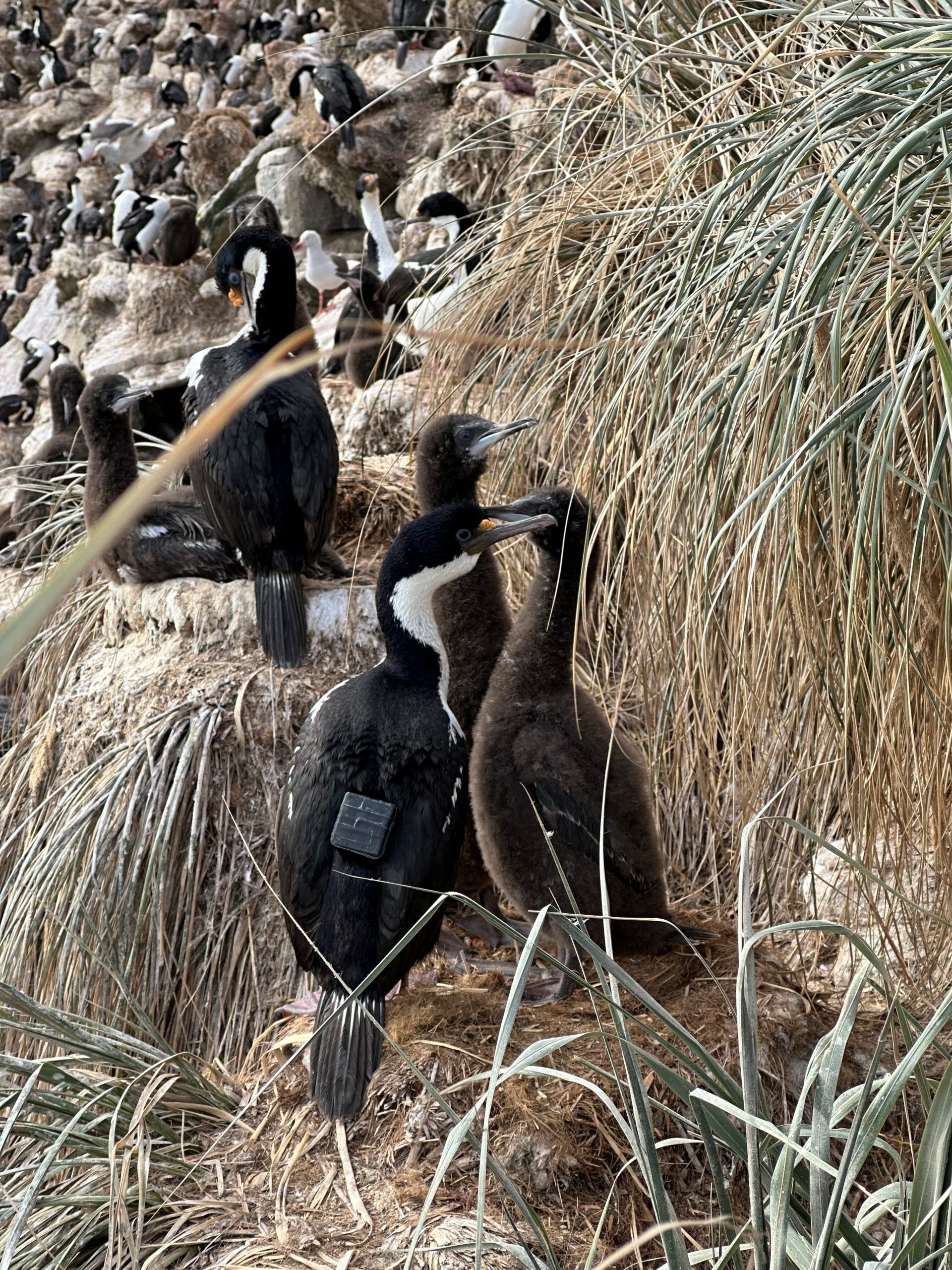
This field season not only marked a significant start in gathering data for my PhD but also provided the opportunity to collaborate with and learn from incredible scientists. And it wasn’t all about penguins! I had the chance to assist researchers in their studies of sooty shearwaters, imperial shags, and even short-eared owls, further enhancing my skills in the field of ornithology.
Since my return in the UK, I have been planning for my next field season, completed two first aid certifications, and attended a training week provided by my DTP in the tranquil town of Cromarty. I am now beginning to analyse the data I collected last season and am eager to dedicate many hours in the laboratory and behind the computer, preparing the data and investigating what the penguins were up to!
I am grateful to SAERI, the Falkland Islands Government, and all the researchers and volunteers who have supported my work and shared their knowledge with me, including Dr Al Baylis, Dr Rachel Orben, Dr Norman Ratcliffe, Dr Klemens Pütz, Dr Antje Steinfurth, Dr Andrea Raya Rey, Dr Ulises Balza, Dr Nicolás Lois, Andrés Capdevielle, Ignacio Domato, and Jaquie Summers. Without their invaluable contributions, this first season would not have been possible.