Between January and March, I have completed a large milestone for my PhD by completing my second and last field season and officially transitioned into the analytical part of my research.
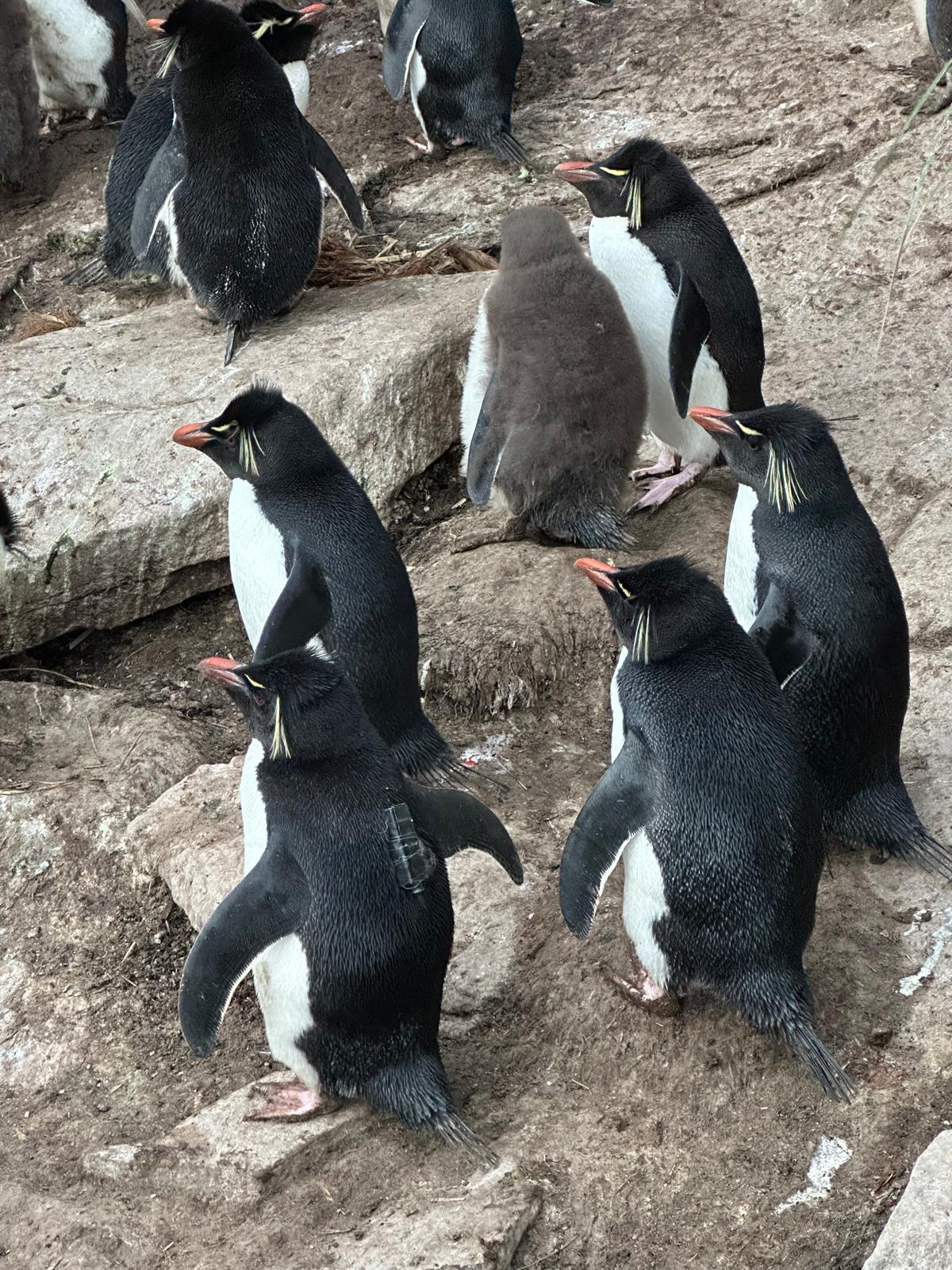
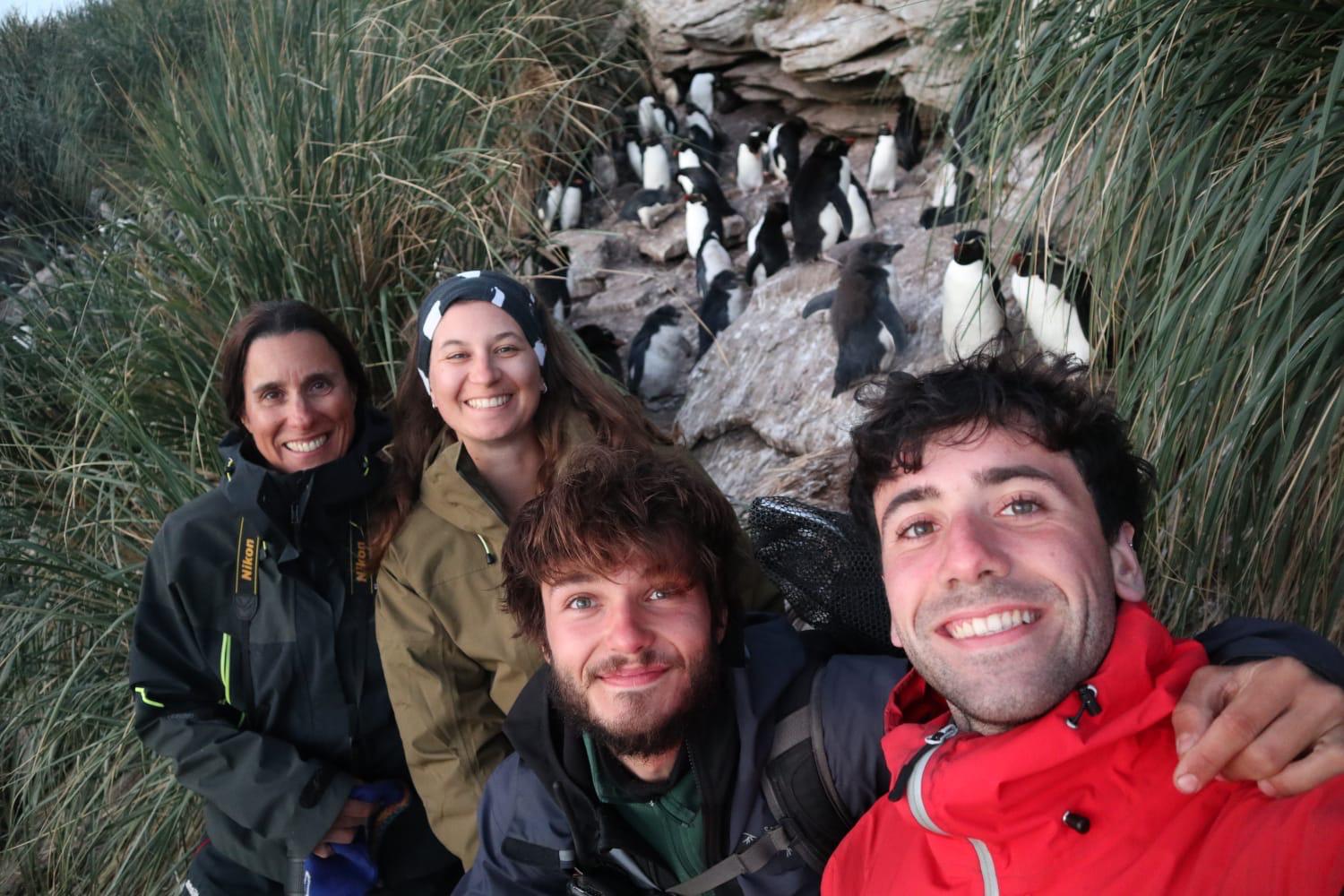
In early January, I left Stanley for Hummock Island, where I worked for a month alongside three other researchers. There I continued my work on southern rockhopper penguins and replicated the crèche foraging behaviour analysis I had undertaken the previous year. In addition to deploying GPS loggers and collecting feather and blood samples from breeding adults, I have also deployed camera loggers to learn more about rockhoppers’ foraging behaviour, preying decisions and underwater interactions with conspecifics. Similarly to all my amazing experiences in the field in the Falkland Islands, I had the chance to learn from other experts on the island and learn more about peat, shags and sooty shearwaters.
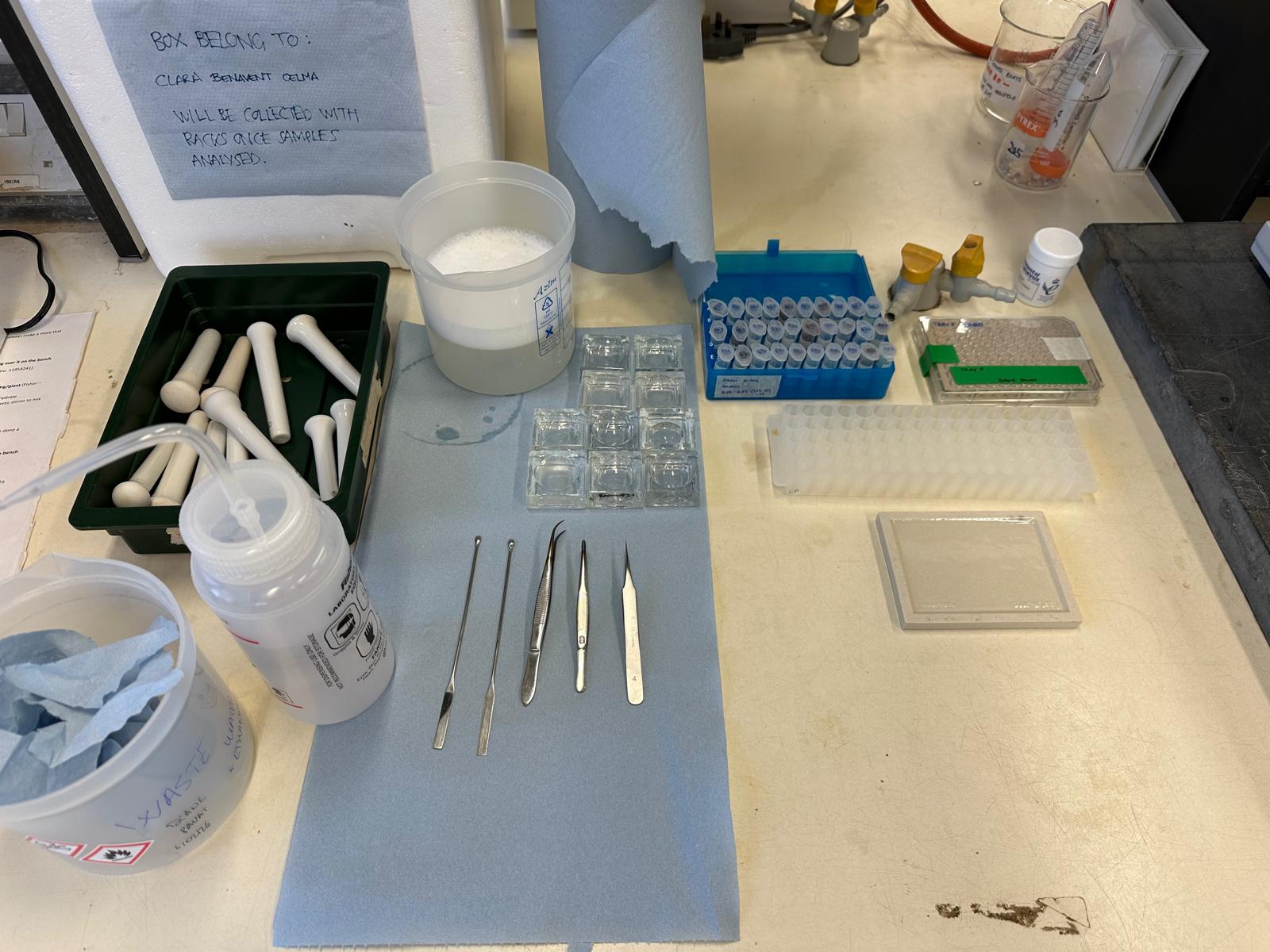
Upon my return from the field in February, I processed the 111 blood samples I collected over my two field seasons to run stable isotope analysis of δ¹³C and δ¹⁵N. Another stepping stone towards acquiring the last data for my project, with the plan to finish processing the 280 feathers left in spring.
Shortly after my return and lab work, I had the chance to be accepted into a Movement Ecology course hosted by the Vogelwarte research institute, located in Sempach, Switzerland. This one-week training course taught us how to work with movement data, clean GPS tracks, and process spatial information in R using Hidden Markov Models (HMM), step-selection functions (SSF) and integrated SSF (iSSF). Whilst challenging, this course was an amazing opportunity for me to get the background skills required for my project and to network with 40 students and renown experts from across the world. The vast diversity of interests, expertise, study species and locations and research questions was incredibly intellectually stimulating.
I am now in the process of completing grant applications, write reports for previous funders, create a protocol to analyse data from the camera loggers and work on my first PhD chapters on rockhopper demography and climate change.
