The Land Recovery Programme (LRP) is a Falkland Islands Government initiative, led by the Department of Agriculture, providing funding and support for projects that aim to tackle land degradation and help restore the Islands’ landscapes.
SAERI is currently working with Sheffield and Albemarle Farms on two projects with different restoration goals. At Sheffield, the focus is on protecting eroding coastal areas and helping vegetation return, while at Albemarle the project is looking at ways to expand Tussac grass habitat and improve the long-term success of new planting.
Sheffield – Restoring Resilience
The exposed coastal banks at Sheffield are particularly vulnerable to wind and water erosion. This project is testing practical ways to protect the soil, prevent further erosion and help vegetation become established. The first phase of the project, which included surveys and site design, is now complete, and we are well into the second phase. Fencing has been installed to keep livestock away from the restoration areas, and 2,250 Fuegian couch plugs, supplied by Atlantic Harvest, have been planted along the coast.
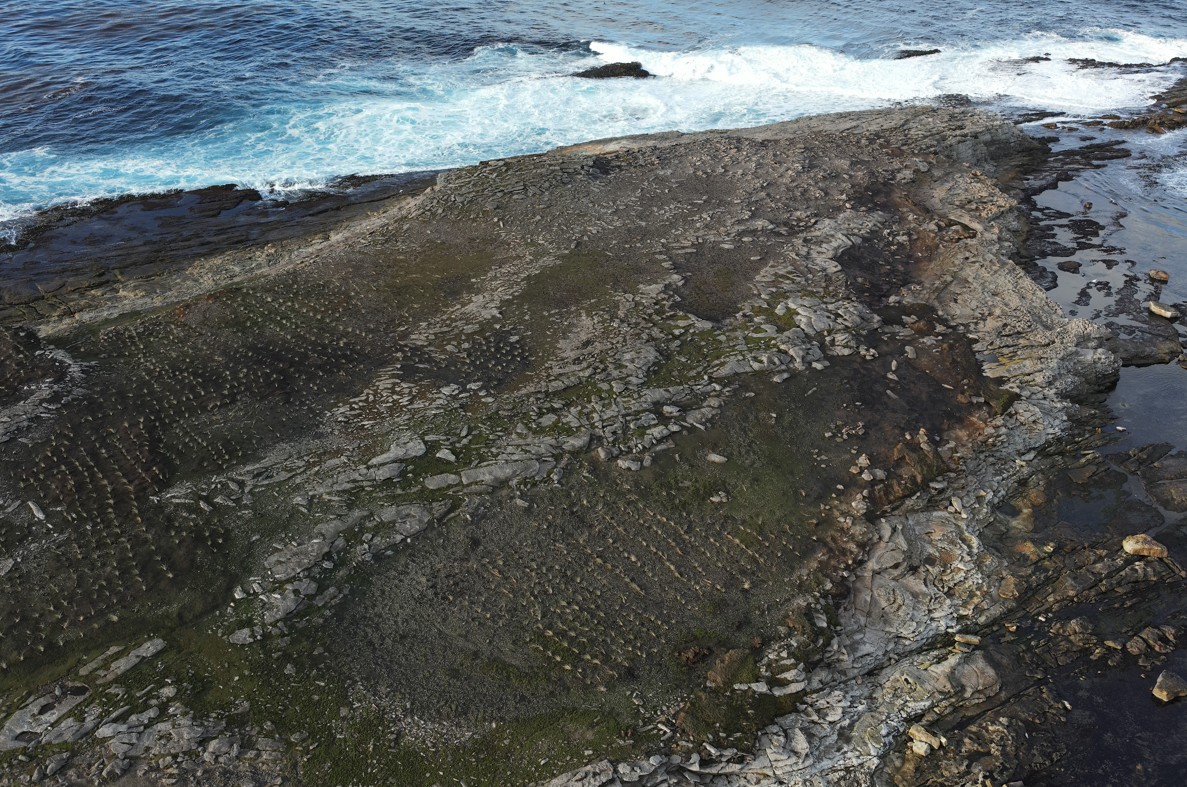
We are also trialling different locally available materials to protect bare and eroding areas, including rocks, shale, sandbags and hay bales. These materials help shield the exposed soil while giving newly planted vegetation a better chance to establish. Aerial surveys were completed before and after planting, providing a baseline against which we can measure changes over time.

Albemarle – Soil, Roots and Restoration
At Albemarle, the project is focused on increasing the area of land covered by Tussac grass. Tussac provides valuable grazing for livestock while also helping to protect the soil and support biodiversity.
A key part of the project is testing whether moving a small amount of soil from established Tussac areas to new planting sites can improve the success of newly planted tillers. The idea is that the soil may contain naturally occurring organisms that could help the new plants establish more successfully.
The project is already well underway. 3,500 metres of new fencing have been installed to keep livestock away from the trial areas and approximately 12,000 Tussac tillers have been planted across two sites. Aerial and ground surveys have been carried out before and after planting, and the sites will continue to be monitored over the coming months.
The restoration areas will continue to be monitored by the landowners, with further surveys planned at 12 and 24 months.
Together, these projects are testing practical approaches to restoring degraded land in the Falklands, while also helping us understand which methods are most effective and could be used more widely in the future.