The Falkland Islands are home to one of the largest peatland carbon stores in the world. But this delicate environment is under threat. Climate change and extensive livestock grazing are reducing the ability of these peatlands to absorb carbon dioxide (CO2) from the atmosphere. In some cases, they may even become sources of greenhouse gas (GHG) emissions instead of the vital carbon sinks they’ve always been.
Over the past eight months, the DEFRA and FIG-funded project “Improving Falkland Peatland GHG Data: Understanding Carbon Sequestration and Offsetting Feasibility” has focused on understanding what’s happening to these peatlands. A huge amount of time and effort has gone into collecting crucial GHG flux and environmental data from more than 20 peatland sites across the islands. These include restored Tussac grasslands at different recovery stages, white grass rangelands ranging from healthy to badly degraded, bare peat areas, and near-natural habitats dominated by Astelia. For me, this has meant countless adventures in the field—exploring the far corners of the Falklands and soaking in its one-of-a-kind landscapes. From east to west, Weddell Island to Bleaker, every site has revealed something special!
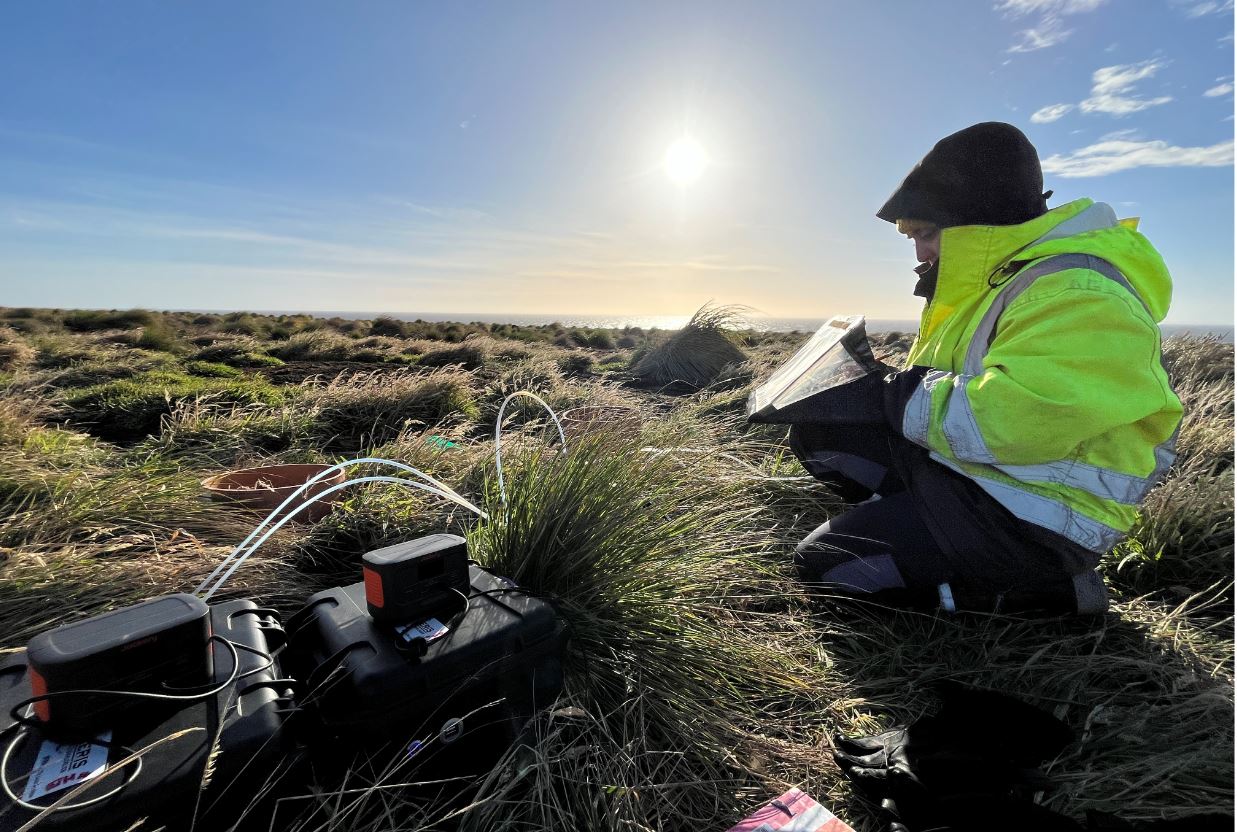
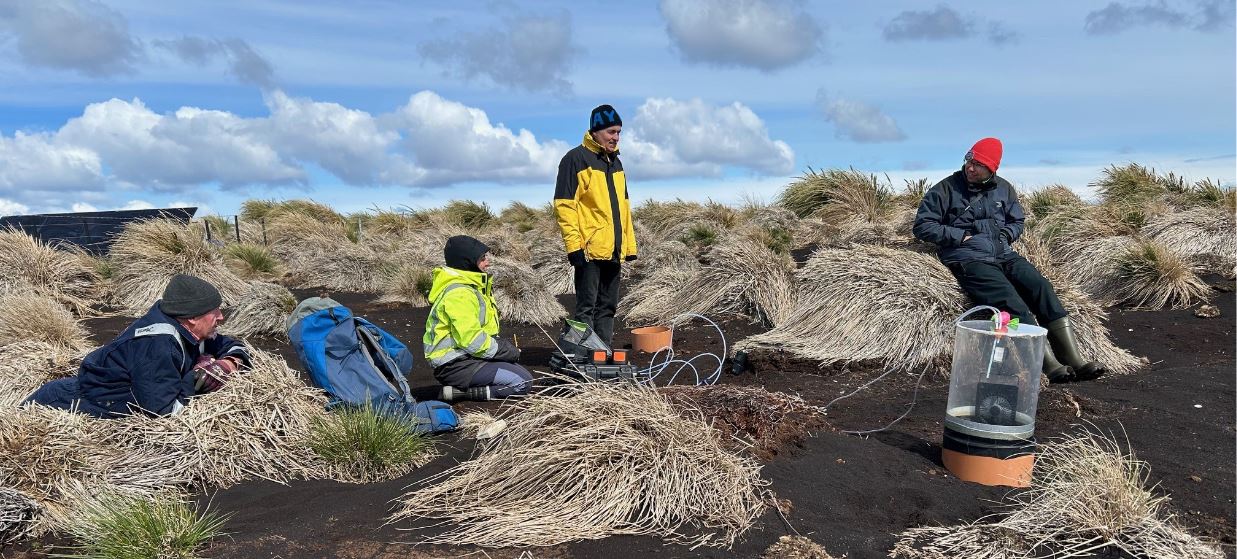
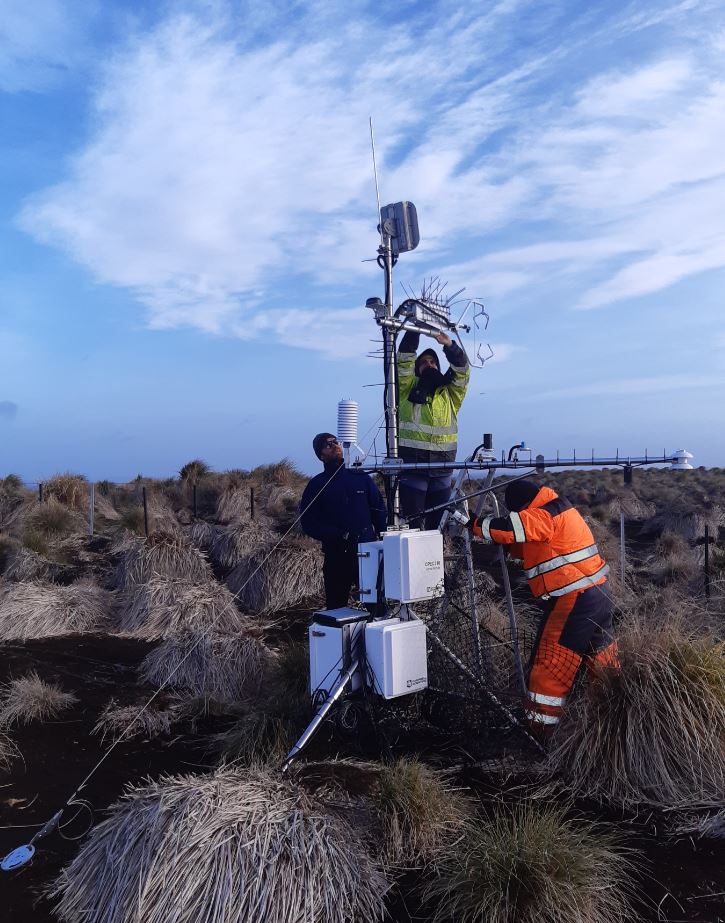
But how do we measure these GHG fluxes? We’re using cutting-edge tools: chamber flux measurements and flux towers, equipped with precise sensors to track GHG emissions, rainfall, soil moisture, temperature, and vegetation health. These advanced techniques help us understand whether Falkland peatlands are still absorbing carbon and contributing to climate change mitigation—or if some areas are tipping into becoming sources of emissions.
Year-round monitoring is critical. GHG fluxes can shift dramatically between seasons. In winter, vegetation slows down and absorbs less CO2, while in summer, during the growing season, many habitats act as carbon sinks. That’s why we’re not stopping these measurements anytime soon—our work will continue through 2026 to build a clear picture of the GHG balance over multiple years.
So far, the spotlight has been on fieldwork, but as we move forward, it’s time to dive into the data. The next steps are all about uncovering patterns, addressing potential biases, and pinpointing the habitats that stand out in terms of GHG emissions.
There’s still so much to learn, so stay tuned as we uncover how Falkland peatlands are responding to the pressures of a changing world!
