Since March, I have completed key milestones for my PhD, by finishing my laboratory work as well as producing early results for two chapters of my thesis.
During the northern hemisphere summer, I was awarded a full grant-in-kind support by the NEIF SUERC lab to cover the cost of my stable isotope analysis and finished processing the 400 feathers from Magellanic and rockhopper penguins to run stable isotope analysis of δ¹³C and δ¹⁵N. All the blood and feather samples prepared as part of my project have now been sent to the lab for mass spectrometry analysis.
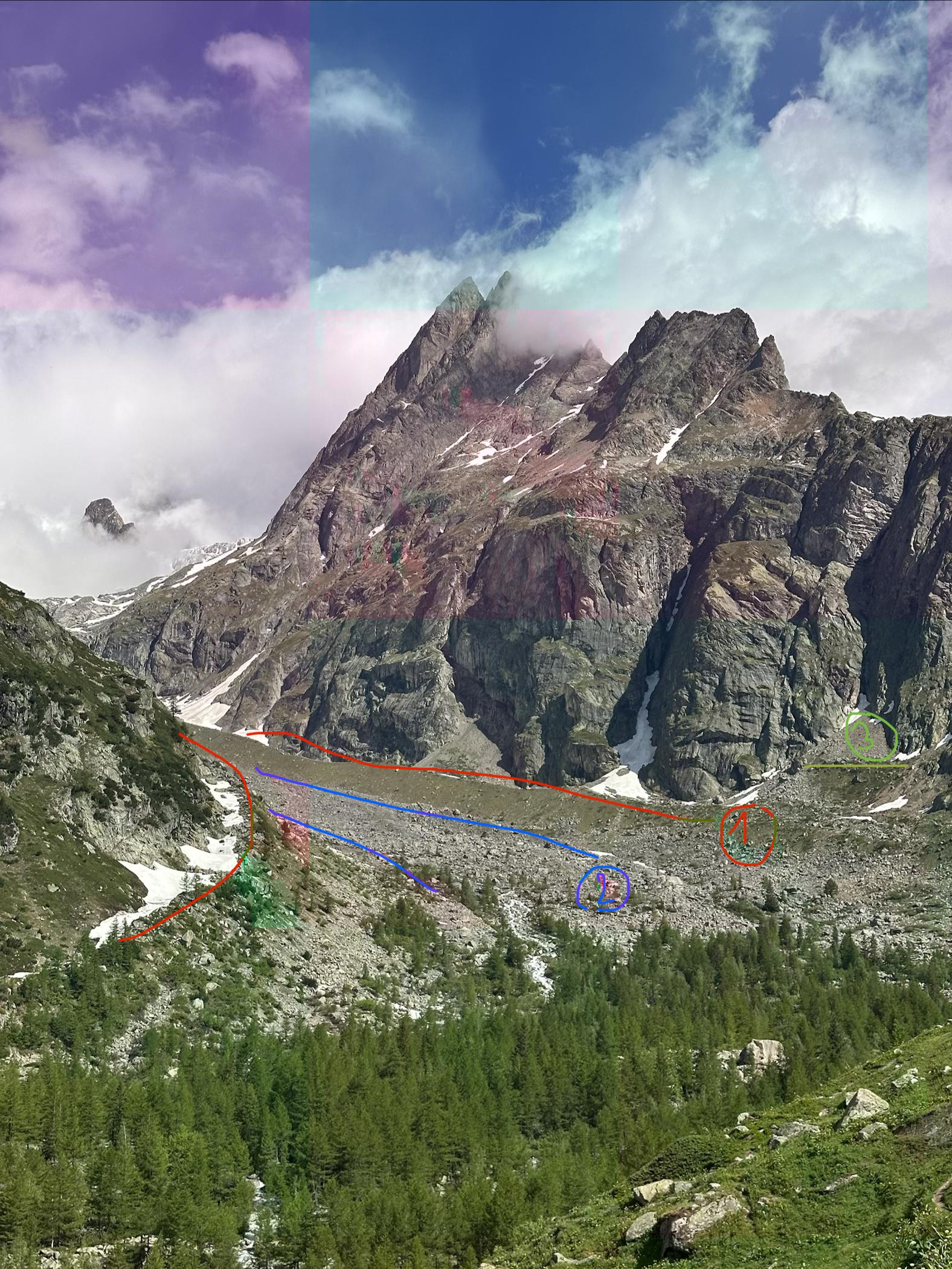
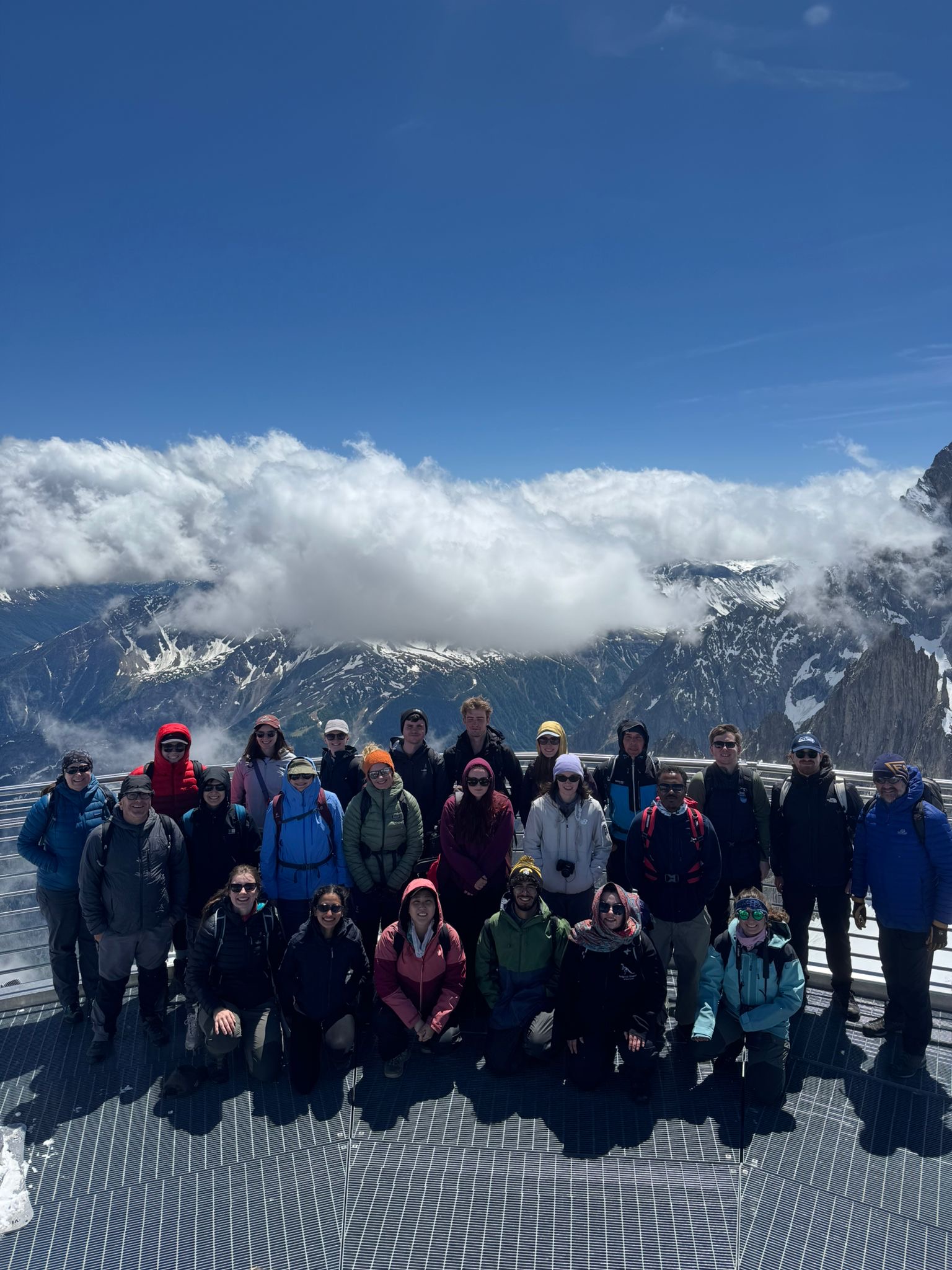
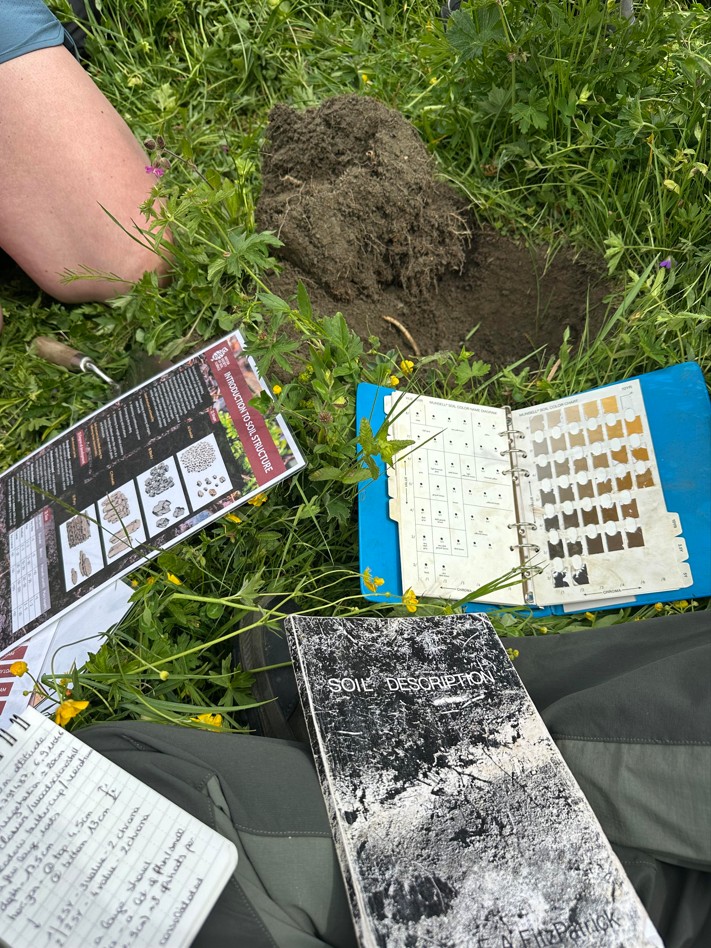
Shortly after my return, I have also attended a fantastic training course as part of my PhD funding QUADRAT DTP in Courmayeur, Italy. We learned a lot about glacier research and how to conduct fieldwork in such environment and how to create small field activities for educational purpose, such as soil type identification. It was a great opportunity to learn about topics I was unfamiliar with and to further bond with my PhD cohort.
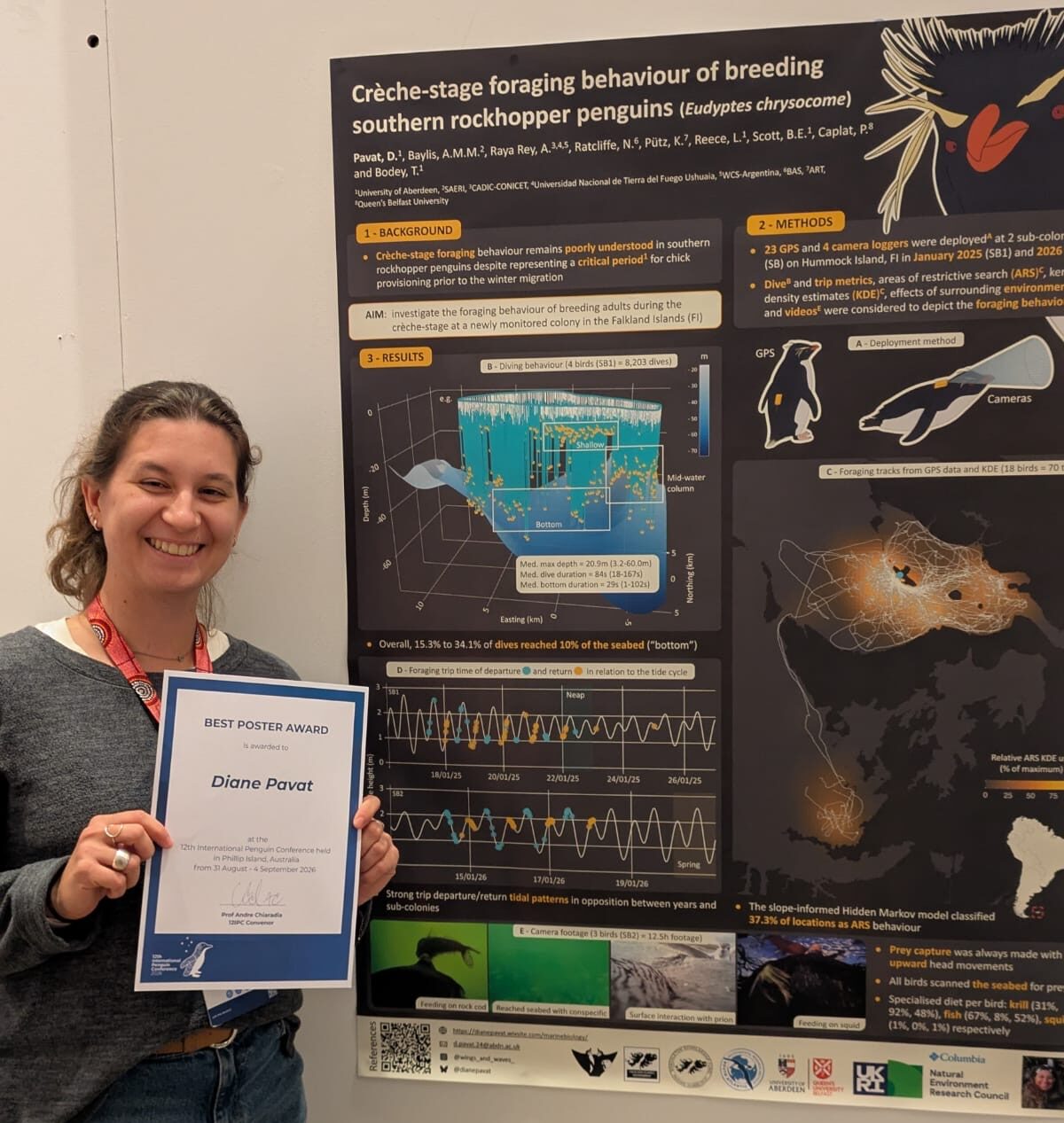
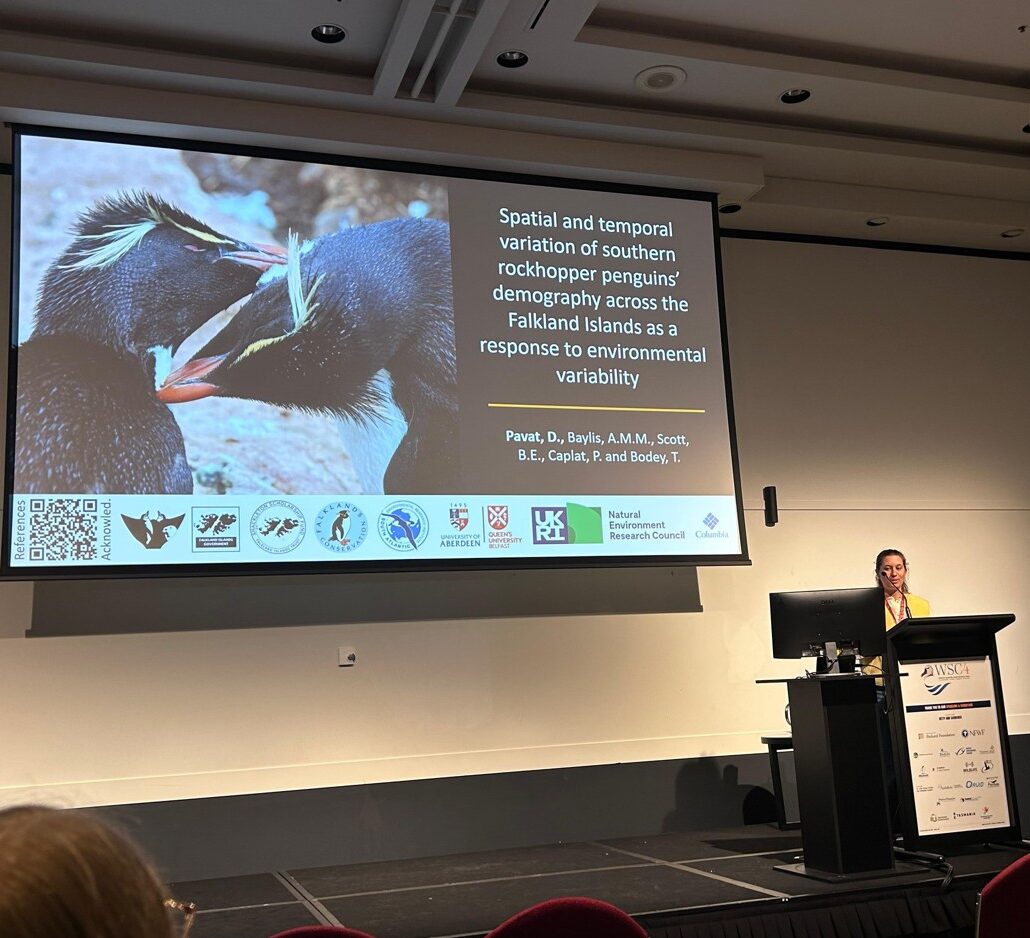
Finally in September, I had the chance to attend both the 12th International Penguin Conference and the 4th World Seabird Conference. In the former, I presented a poster on the tracking and camera data obtained from the work I conducted in 2025 and 2026 on Hummock Island; while in the later, I gave a 15min talk on preliminary results of my demography analysis of rockhopper penguin population trends and breeding success across the Falklands. Both conferences were a fantastic opportunity to catch up with people I had spent time in the field with, but also network with experts in my area of research. I was awarded the best poster price at the IPC and received a highly commended award at the WSC.